Sasha Rudensky ’97: The Artist
by Emerson K. ’27
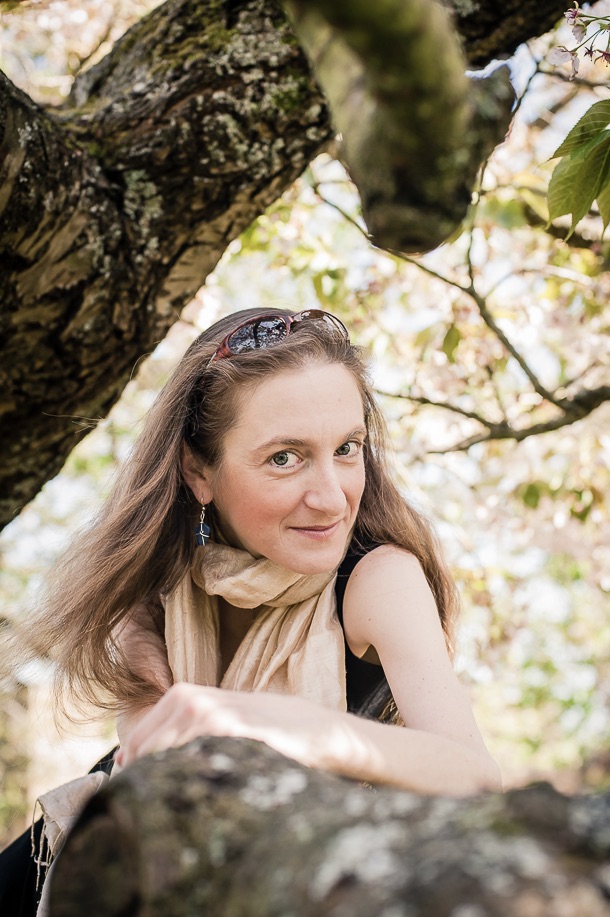
On the banks of the Los Angeles River, photographer Sasha Rudensky ’97 finds a reflection. The river — contradictory, contained, wild, ever-changing — mirrors her unorthodox life and artistic process. She has been both outsider and insider, teacher and the taught, cataloguing the strange paradoxes and idiosyncrasies of life through a lens both distant and familiar.
Rudensky came to America as an immigrant and outsider. Unable to speak English, she found solace in interpreting the world through careful observation. “We are swimming in visual matter at all points in our life,” she notes. When she first began a photography course with teacher Dale Bauer at Lakeside, it was clear she had an aptitude in translating it.
Rudensky went on to study studio art and Russian literature at Wesleyan University, but the medium kept calling to her. Returning to the space only a year and a half later in an educational role, she describes teaching photography as a “self-replenishing system,” with each student offering their own diverse experience and engagement with the world.
She has worked on editorial assignments for publications including “The New Yorker” and “The New York Times Magazine.” Her first works used portraiture to interrogate the dichotomy of the performance of the self. But she has always been fascinated by the idea of place, the compelling and sometimes irrational thrall it has over humanity.
Rudensky’s process is inherently exploratory; for her, photography is discovery rather than conclusion. “I am an artist who is interested in finding something I don’t know I’m looking for,” she says. Having already returned to Russia to reconcile shifting parts of her immigrant identity, she now revisits the place that she fell in love with a decade ago — the Los Angeles River.
In her recent project, “Channel,” Rudensky dissects and dismantles the binary paradigm of human-nature interaction, rendering the river as an autonomous being — “a kind of primal force that will never bend to human destruction.” Rudensky charts the 51-mile-long waterway through time and space, capturing ephemeral moments of light and color and the erratic liminality of a landscape under constant human influence. Each photographic fingerprint is immediate and alien, oppressive and fantastical, defying any semblance of control. “Channel” expertly encapsulates the living memory that is the river, channelized and rewilded into a fusion of organic and synthetic, reflecting the strange contradictions of a modern world in flux.
by Emerson K. ’27
by Vina V. ’29